Serving the USA Call (888) 448-7024
New State Roofing Repair

Roofing · the USA

Shingle Roof Repair in the USA

New State Roofing Repair handles roofing work across the USA.

Shingle Roof Repair in the USA
Coverage
the USA

Inspection First Approach

Every roof repair starts with a close look at the full roof surface, underlayment, and flashing to locate the actual source of trouble rather than guessing from the outside.

Material Matching Focus

Technicians select replacement shingles that align with the existing product in weight, color, and texture so the finished section blends without drawing attention.

Clear Scope Definition

Before work begins the crew explains exactly which sections will be addressed and what will remain untouched, giving the homeowner a precise picture of the job.

Services

What we handle in the USA

01 / 08

Roof Repair

New State Roofing Repair follows the same inspection and repair sequence on every job so results remain predictable regardless of where the property is located. Materials are chosen to match the existing roof rather than the lowest-cost option available.

Get a quote
02 / 08

Roof Replacement

Each project follows the same sequence of inspection, scope preparation, material delivery, and installation. Records of measurements, materials used, and crew assignments are retained for the property file.

Get a quote
03 / 08

Roof Inspection

Teams follow a set order of checks that covers visible surfaces and reachable internal spots. Notes come out in the same format each time so later visits can be compared directly.

Get a quote
05 / 08

Storm Damage Roof Repair

Assessments consider the full roof assembly and surrounding structures. Replacement decisions are limited to areas showing clear compromise. Records are kept to support later insurance or maintenance needs.

Get a quote
06 / 08

Emergency Roof Repair

Crews follow the same inspection order and documentation steps regardless of job size. Materials are chosen to match the existing roof load and local code requirements. Records are provided after each visit so property owners have a clear account of what was done.

Get a quote
07 / 08

Shingle Replacement

We focus on removing old material when needed, checking the deck thoroughly, and installing new shingles with attention to ventilation and flashing details. The crew works to leave the site clean and the roof ready for the seasons ahead.

Get a quote

Signs That Point Past Surface Wear

Many homeowners assume a few missing granules or a slight sag means the entire roof needs replacement, yet that is rarely the case. A closer check often reveals that only the top course has taken damage from wind-driven debris while the layers beneath remain intact. The real task is tracing water paths rather than replacing everything visible. Crews lift individual shingles to inspect the felt or synthetic underlayment for dark staining or soft spots. When those layers are still firm, targeted shingle replacement of the affected course restores protection without disturbing sound sections nearby. This step-by-step check corrects the common belief that any visible granule loss equals total failure.

Common Causes Behind Shingle Movement

Shingles can lift or curl for reasons that have little to do with age. Heat buildup in poorly ventilated attics pushes them upward, and ice dams in colder months force water under the edges. Homeowners sometimes notice daylight through the decking from inside the attic and assume a major leak has formed. In many instances the daylight comes from small gaps created by thermal expansion rather than missing material. Checking ventilation first often solves the movement before any shingles are touched. When actual tears are present, the crew records their location on a simple diagram so the repair stays limited to those spots.

Our process

How A Typical Repair Moves Forward

The sequence starts with an assessment that identifies the exact area needing roof repair work, then proceeds through preparation, replacement, and a final walk-around to confirm the surrounding shingles remain undisturbed.

Initial visit to mark the affected courses and note ventilation conditions.
Removal of damaged sections and installation of new underlayment patches.
Placement of matching shingles followed by a check of adjacent edges for lift.

Sequence From Assessment To Finish

Work begins with a ground-level view using binoculars to note obvious displacement, followed by an attic inspection for moisture marks on rafters. Once the affected area is marked, old fasteners are removed without tearing surrounding good shingles. New underlayment patches are set in place, then matching shingles are nailed and sealed at the correct exposure. The final pass checks for lifted edges on adjacent courses that could allow future water entry. This order prevents the common mistake of fastening new material over hidden damage that will later cause callbacks.

Distinguishing One Job From Another

Two roofs with similar missing shingles can require different fixes depending on slope and exposure. A low-slope section may need extra sealant along the seams, while a steep face relies more on proper nailing patterns. Crews adjust fastener length when multiple layers are already present so the new nails reach solid wood. They also note whether previous repairs used mismatched sealant that has since hardened and cracked. These details determine whether the current roof repair stays simple or requires removal of old patches first.

Pricing

What Influences The Final Cost

The scale of the damaged area, the number of layers already present, and access around chimneys or skylights all move the total. The figures below are starting points only and are not quotes.

Shingle roof repair — starting at $650 Valley metal replacement — starting at $480 Ridge cap repair — starting at $320 Underlayment patch section — starting at $290 Fastener re-secure on one slope — starting at $210 Flashing adjustment around vent — starting at $175 Ice dam cleanup and reset — starting at $390 Granule loss assessment with minor replacement — starting at $240 Soffit vent screen addition during repair — starting at $160

Work On Rental Properties And Older Structures

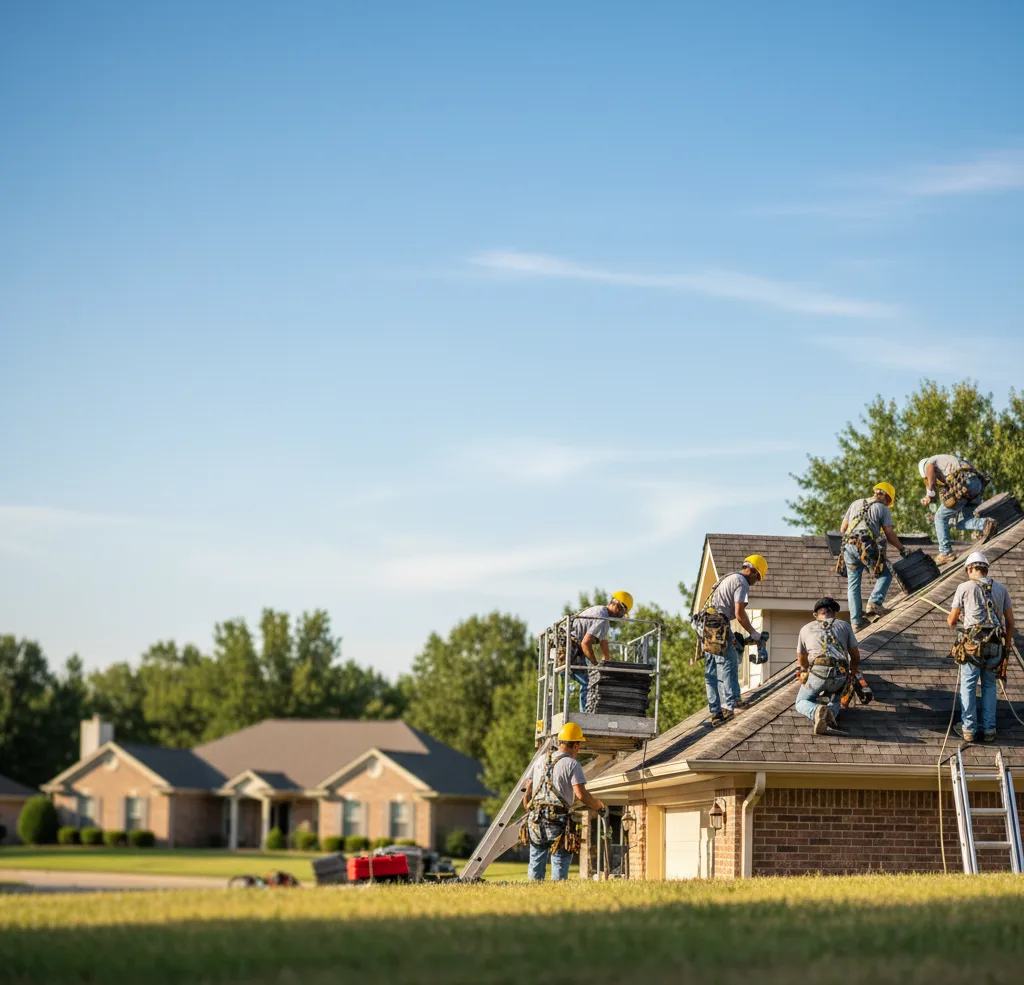
Rental owners often request repairs that keep the building code compliant without changing the overall appearance, since tenants may not notice cosmetic updates. On older homes the crew checks whether the existing shingles are the original three-tab style or a later laminated product, because fastener patterns differ. When the decking itself shows age, small plywood inserts can be added under the repair area to restore a solid nailing surface. Seasonal checks before winter focus on clearing debris from valleys and confirming that step flashing remains tight against the wall. These visits catch early separation before it allows water into living spaces.

What To Check Before Any Crew Arrives

Homeowners can look for consistent granule accumulation in gutters after heavy rain, which often signals active wear on the north or east slopes first. They can also note whether attic insulation feels damp near the eaves, a sign that water has already passed the shingles. Writing down the dates of any prior repairs helps the crew understand how long a section has been under stress. These observations narrow the inspection area and keep the visit focused on the actual problem rather than a full-roof survey.

FAQ

Common questions in the USA

New State Roofing Repair customer support in the USA
How does the crew decide whether to replace only part of a course?

They lift the row above the damaged area and examine the nails and underlayment directly. If the nails are still tight and the felt shows no staining, only the broken shingles are swapped. When staining extends under good-looking shingles, the crew extends the repair until clean material is reached.

What happens if an older layer is discovered under the current shingles?

The extra layer changes fastener length and may require removal of a small section to reach solid decking. The crew notes the condition of the older layer on the diagram so the homeowner can decide whether a broader removal makes sense later.

Why do some roofs show granule loss but still hold water out?

Granule loss on the surface does not always mean the underlying felt has failed. The felt layer can remain watertight even after the top coating wears away, especially on slopes that do not face prevailing weather. A direct check of the felt is required before deciding whether replacement is needed.

Need Shingle Roof Repair in the USA?

Shingle Roof Repair across the USA. Call (888) 448-7024.

Call (888) 448-7024