Roofing · the USA
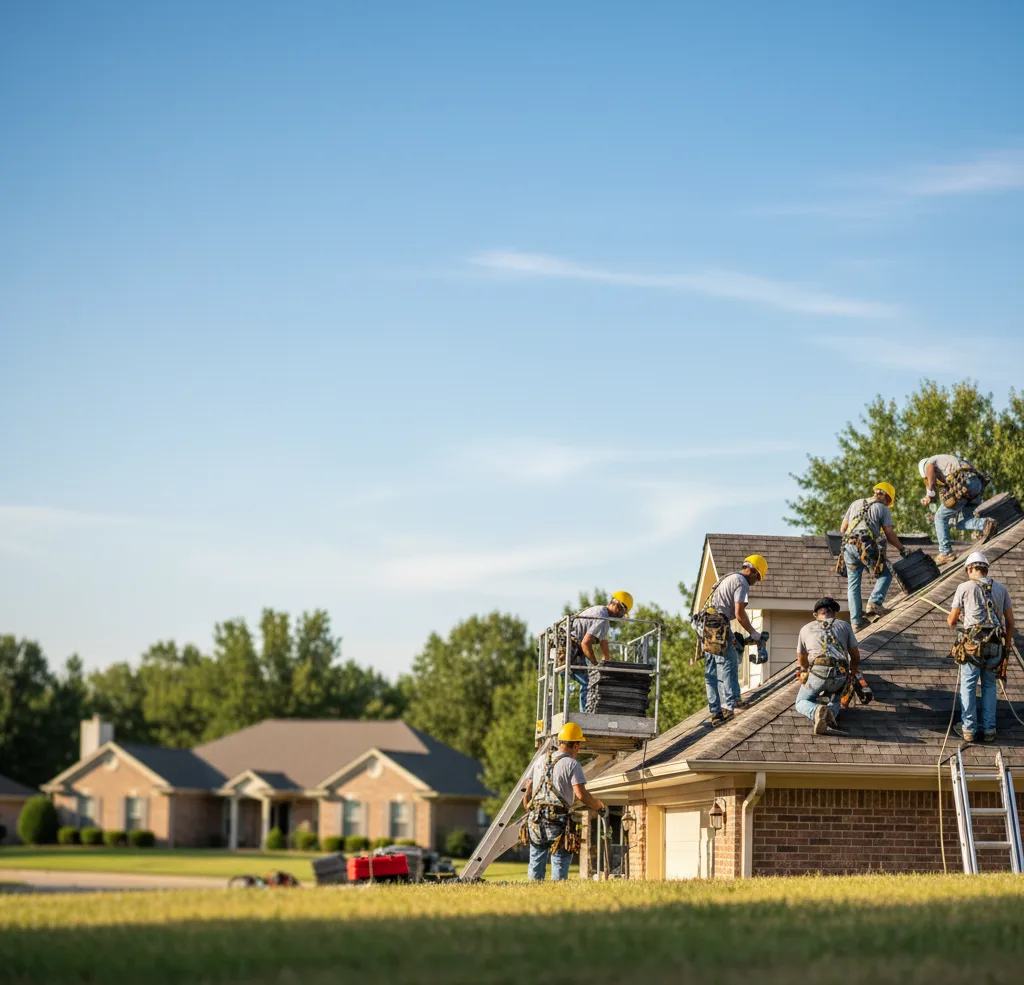
Crews document existing conditions with photos before starting and again after the roof repair. Materials are selected to match the roof rather than using a single universal product. Follow-up visits are scheduled only when the homeowner requests them after an inspection or emergency roof repair.
Water stains on ceilings or walls often appear first in upper rooms or near chimneys. Discolored drywall or peeling paint can spread over weeks when moisture keeps entering. Attic insulation that feels damp or smells musty usually sits directly below the entry point. Homeowners may also notice drips during or right after rain, especially if wind drives water under lifted shingles. Checking the attic on a clear day with a flashlight can reveal daylight through small gaps or wet sheathing boards. These clues help narrow where the problem begins without requiring the entire roof to be uncovered at once.
Aged sealant around vents, skylights, and pipe boots cracks from sun exposure and temperature swings. Shingles that have lost granules or curled at the edges allow water to slip underneath during storms. Flashing that has pulled away from walls or chimneys creates channels for runoff. Nail pops and small punctures from foot traffic or falling branches also become entry points over time. Once the crew maps these conditions, they can decide whether a targeted patch or a larger shingle replacement will hold best.
FAQ

They lift the row above the damaged area and examine the nails and underlayment directly. If the nails are still tight and the felt shows no staining, only the broken shingles are swapped. When staining extends under good-looking shingles, the crew extends the repair until clean material is reached.
The extra layer changes fastener length and may require removal of a small section to reach solid decking. The crew notes the condition of the older layer on the diagram so the homeowner can decide whether a broader removal makes sense later.
Granule loss on the surface does not always mean the underlying felt has failed. The felt layer can remain watertight even after the top coating wears away, especially on slopes that do not face prevailing weather. A direct check of the felt is required before deciding whether replacement is needed.
Shingle Roof Repair across the USA. Call (888) 448-7024.
Call (888) 448-7024