Roofing · the USA
Teams follow a set order of checks that covers visible surfaces and reachable internal spots. Notes come out in the same format each time so later visits can be compared directly.
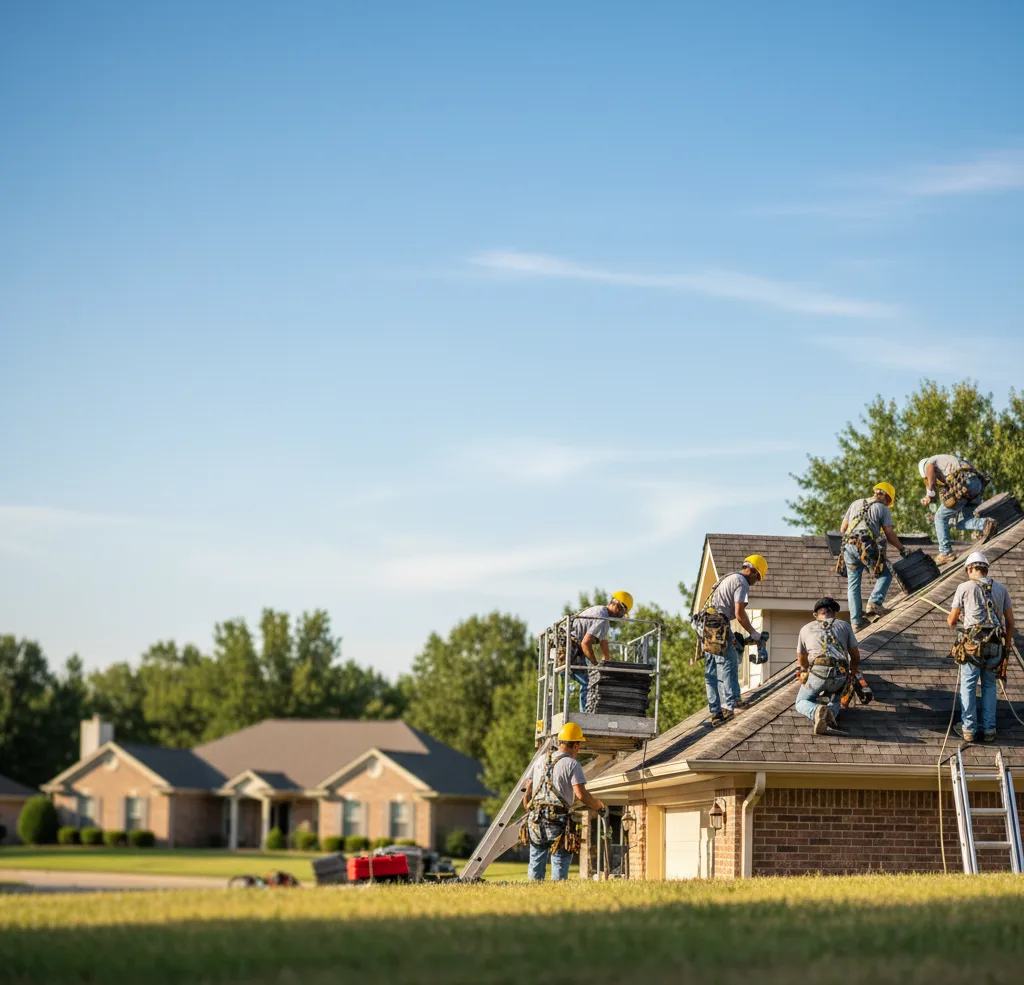
Inspections start by looking at surface conditions that can point to the need for roof repair. Discoloration, curling edges, or granules in the gutters are usual signs that call for a closer look. Inspectors also check how earlier shingle replacement work has held and whether any patches show separation.
The full roof plane gets covered, along with vents, skylights, and chimneys. Fastener condition and underlayment are noted where they can be reached. Findings are written down so owners get a clear view of the current state.
FAQ

They lift the row above the damaged area and examine the nails and underlayment directly. If the nails are still tight and the felt shows no staining, only the broken shingles are swapped. When staining extends under good-looking shingles, the crew extends the repair until clean material is reached.
The extra layer changes fastener length and may require removal of a small section to reach solid decking. The crew notes the condition of the older layer on the diagram so the homeowner can decide whether a broader removal makes sense later.
Granule loss on the surface does not always mean the underlying felt has failed. The felt layer can remain watertight even after the top coating wears away, especially on slopes that do not face prevailing weather. A direct check of the felt is required before deciding whether replacement is needed.
Shingle Roof Repair across the USA. Call (888) 448-7024.
Call (888) 448-7024