Roofing · the USA
We focus on removing old material when needed, checking the deck thoroughly, and installing new shingles with attention to ventilation and flashing details. The crew works to leave the site clean and the roof ready for the seasons ahead.
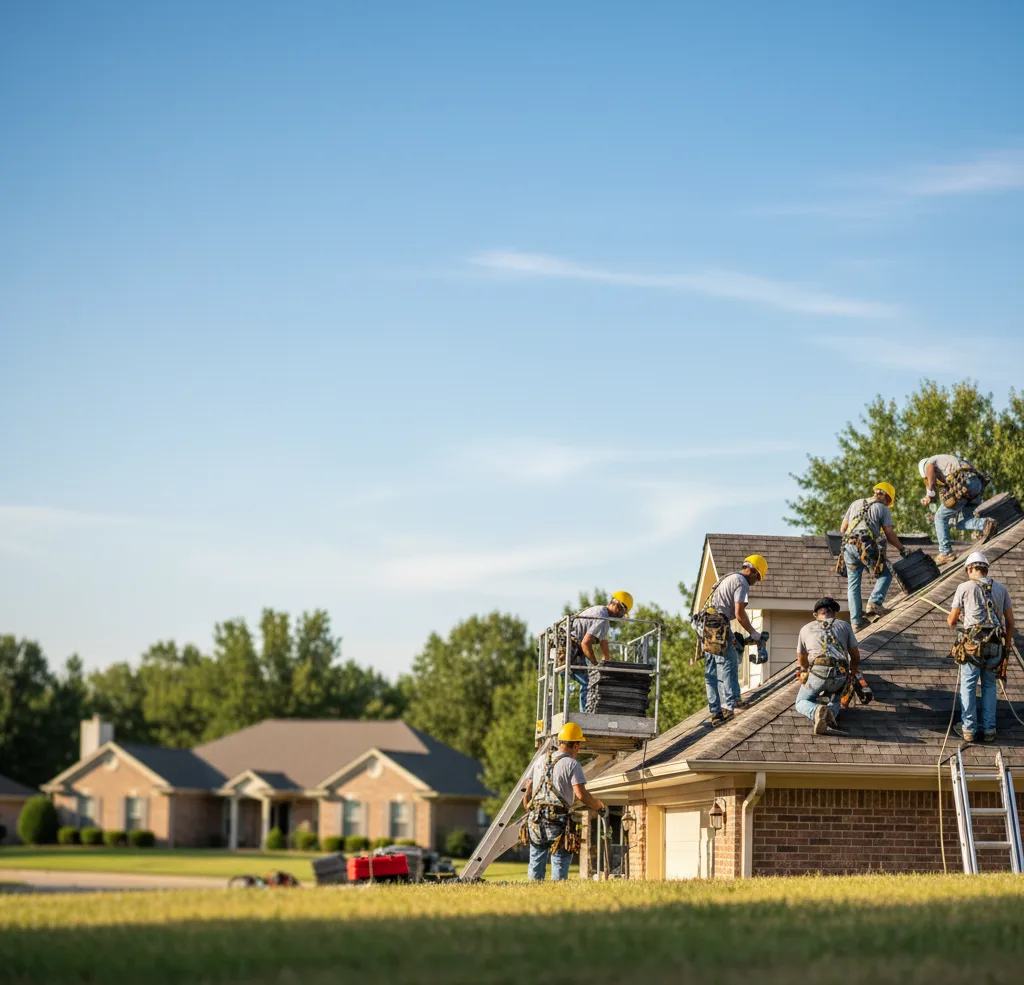
Homeowners often notice curling edges, missing granules in the gutters, or small leaks during heavy rain. These signs usually point to shingles that have reached the end of their useful life and require roof repair. A close look at the roof surface shows whether the damage is limited to a few areas or spread across more of the slope. Checking flashing around chimneys and vents also reveals spots where water may be getting in. Once those areas are marked, the crew can plan the scope of work without surprises once the job starts.
The process begins with removing the old shingles down to the deck where needed. Any damaged sections of plywood or felt get replaced at that stage. New underlayment goes on next, followed by the chosen shingles installed row by row. Proper nailing patterns and alignment keep the rows straight and secure against wind. Ridge vents or other ventilation pieces are added or refreshed if the existing ones no longer meet current standards.
FAQ

They lift the row above the damaged area and examine the nails and underlayment directly. If the nails are still tight and the felt shows no staining, only the broken shingles are swapped. When staining extends under good-looking shingles, the crew extends the repair until clean material is reached.
The extra layer changes fastener length and may require removal of a small section to reach solid decking. The crew notes the condition of the older layer on the diagram so the homeowner can decide whether a broader removal makes sense later.
Granule loss on the surface does not always mean the underlying felt has failed. The felt layer can remain watertight even after the top coating wears away, especially on slopes that do not face prevailing weather. A direct check of the felt is required before deciding whether replacement is needed.
Shingle Roof Repair across the USA. Call (888) 448-7024.
Call (888) 448-7024