Roofing · the USA
Crews follow the same inspection order and documentation steps regardless of job size. Materials are chosen to match the existing roof load and local code requirements. Records are provided after each visit so property owners have a clear account of what was done.
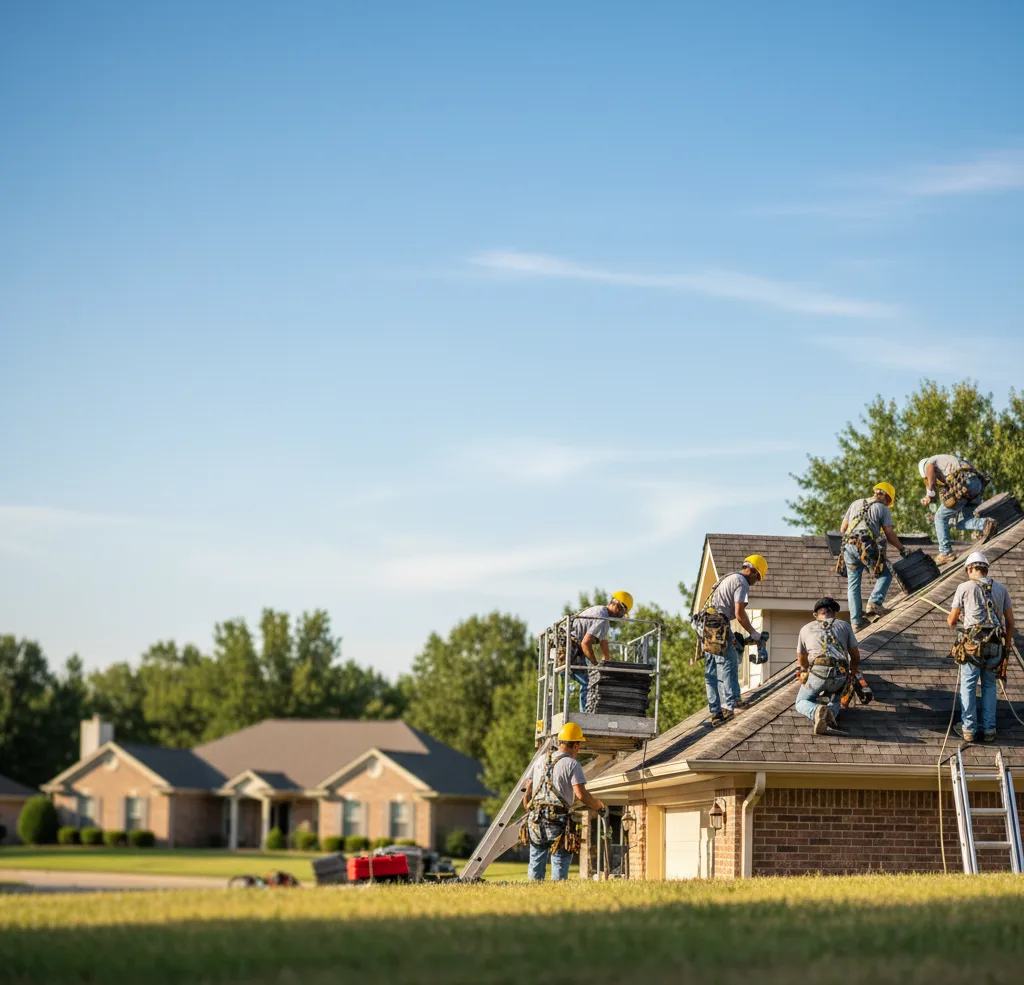
Technicians begin roof leak repair at the interior to map water stains on ceilings and walls, then move to the attic to check for wet insulation and daylight visible through decking. From there they examine the exterior slope by slope, looking at shingle alignment, granule loss, and any lifted edges around vents and skylights. Flashing at chimneys, valleys, and wall intersections receives close attention because these junctions are frequent entry points for water. When damage is isolated, only the affected area is opened and rebuilt with matching underlayment and fasteners. Larger sections of compromised decking are replaced before new shingle replacement is installed so the repair rests on sound structure rather than on weakened boards.
Wind-driven rain often forces water under ridge caps and around pipe boots that have lost flexibility. Ice dams in colder months push moisture behind gutters and under eaves. Tree limbs that rub during storms can tear surface layers and create small punctures that widen over time. Homeowners can spot granules collecting in gutters or daylight visible from inside the attic, both signs that the surface layer has worn through. These observations help prioritize which sections need immediate attention during roof inspection versus areas that can wait for scheduled maintenance.
FAQ

They lift the row above the damaged area and examine the nails and underlayment directly. If the nails are still tight and the felt shows no staining, only the broken shingles are swapped. When staining extends under good-looking shingles, the crew extends the repair until clean material is reached.
The extra layer changes fastener length and may require removal of a small section to reach solid decking. The crew notes the condition of the older layer on the diagram so the homeowner can decide whether a broader removal makes sense later.
Granule loss on the surface does not always mean the underlying felt has failed. The felt layer can remain watertight even after the top coating wears away, especially on slopes that do not face prevailing weather. A direct check of the felt is required before deciding whether replacement is needed.
Shingle Roof Repair across the USA. Call (888) 448-7024.
Call (888) 448-7024