Roofing · the USA
We focus on matching shingle weight and color to the existing roof while confirming ventilation meets current standards. Crews document every layer removed and note any deck repairs made before new material is installed.
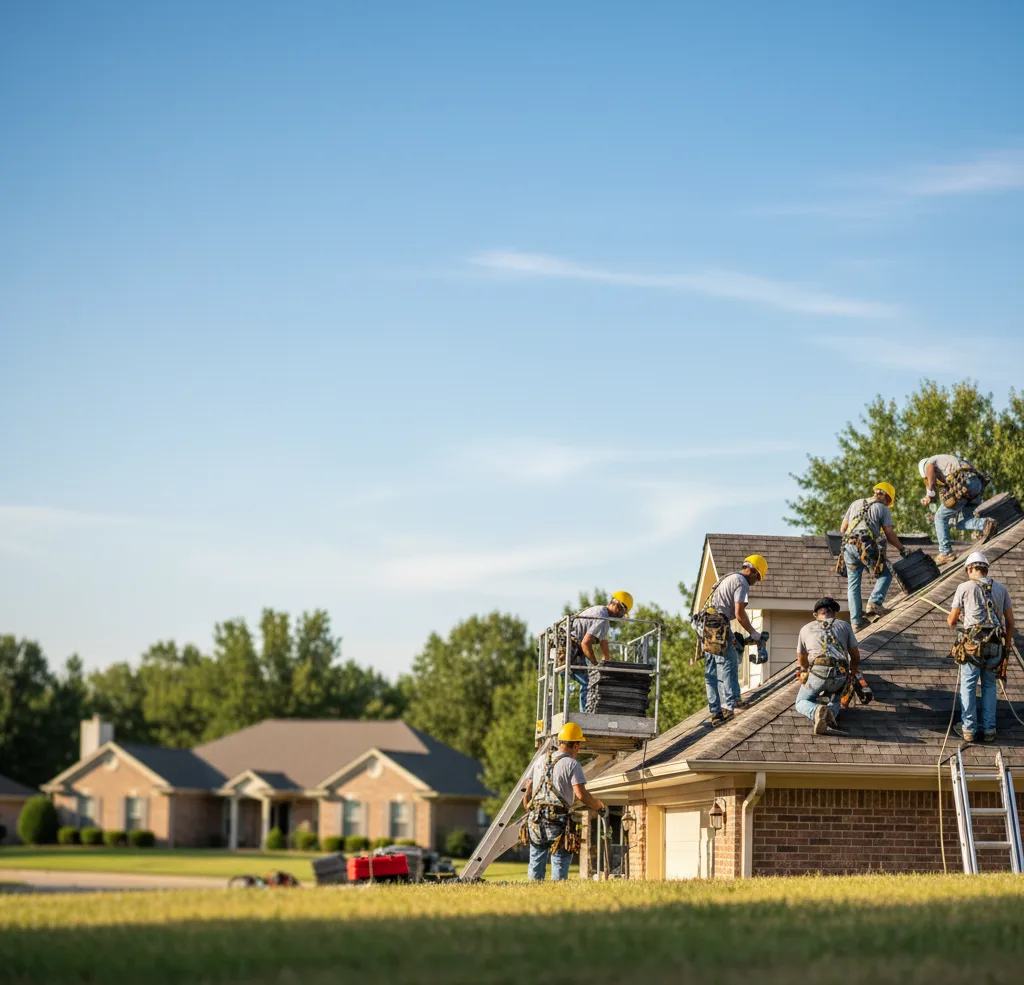
Homeowners often notice curled edges on shingles or small granules collecting in gutters after heavy rain. These visible changes usually point to aging layers that no longer shed water effectively. A closer look may reveal cracked sealant around vents or flashing that has pulled away from the decking. When these conditions appear together, moisture can reach the underlayment and cause further damage over time. Replacing the affected sections with new asphalt shingles restores the protective surface and prevents water from entering the attic space. The process starts with removing the old layers down to the deck, checking for soft spots, and installing fresh underlayment where needed. Proper alignment of each course keeps the surface even and directs runoff correctly. Attention to ridge vents and drip edges during this stage helps maintain airflow and reduces the chance of ice dams forming in colder months.
Many roofs show uneven wear along the south-facing slopes where sun exposure is strongest. Blistering from trapped moisture or missing tabs after wind events are also frequent findings during inspections. Homeowners can check these areas from the ground with binoculars to spot obvious gaps or lifted sections. Addressing the problem early with roof repair usually means fewer layers need removal and keeps the job focused on the damaged zones rather than the entire surface.
FAQ

They lift the row above the damaged area and examine the nails and underlayment directly. If the nails are still tight and the felt shows no staining, only the broken shingles are swapped. When staining extends under good-looking shingles, the crew extends the repair until clean material is reached.
The extra layer changes fastener length and may require removal of a small section to reach solid decking. The crew notes the condition of the older layer on the diagram so the homeowner can decide whether a broader removal makes sense later.
Granule loss on the surface does not always mean the underlying felt has failed. The felt layer can remain watertight even after the top coating wears away, especially on slopes that do not face prevailing weather. A direct check of the felt is required before deciding whether replacement is needed.
Shingle Roof Repair across the USA. Call (888) 448-7024.
Call (888) 448-7024