Roofing · the USA
Each project follows the same sequence of inspection, scope preparation, material delivery, and installation. Records of measurements, materials used, and crew assignments are retained for the property file.
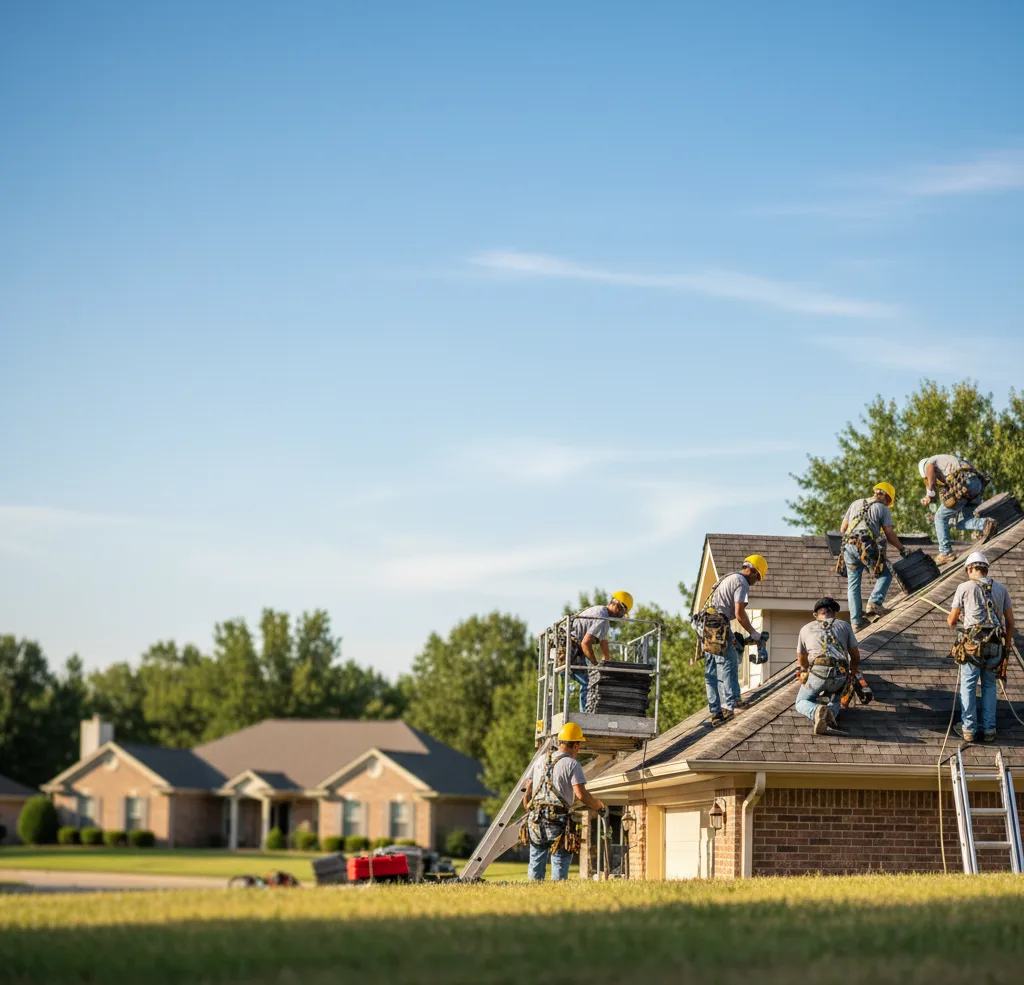
Missing shingles, widespread granule loss, and daylight visible from the attic all point to the end of a roof’s useful life. A visual inspection from the ground and inside the attic reveals whether localized repairs can still hold or whether the entire assembly must be removed. Age of the current roof, number of layers already present, and condition of the decking determine the scope. Once those factors are recorded, the crew can prepare a replacement plan that accounts for ventilation, insulation depth, and attachment methods required by code.
Tear-off removes every layer down to the decking. Damaged boards are replaced, new underlayment is rolled out, and flashing is renewed at every penetration and edge. New shingles or other chosen coverings are installed with the correct nailing pattern and overlap. Ridge vents or other exhaust points are added or upgraded when airflow calculations show they are needed. Final inspection checks for proper fastening, straight courses, and sealed valleys before the job is considered complete.
FAQ

They lift the row above the damaged area and examine the nails and underlayment directly. If the nails are still tight and the felt shows no staining, only the broken shingles are swapped. When staining extends under good-looking shingles, the crew extends the repair until clean material is reached.
The extra layer changes fastener length and may require removal of a small section to reach solid decking. The crew notes the condition of the older layer on the diagram so the homeowner can decide whether a broader removal makes sense later.
Granule loss on the surface does not always mean the underlying felt has failed. The felt layer can remain watertight even after the top coating wears away, especially on slopes that do not face prevailing weather. A direct check of the felt is required before deciding whether replacement is needed.
Shingle Roof Repair across the USA. Call (888) 448-7024.
Call (888) 448-7024