Roofing · the USA
Assessments consider the full roof assembly and surrounding structures. Replacement decisions are limited to areas showing clear compromise. Records are kept to support later insurance or maintenance needs.
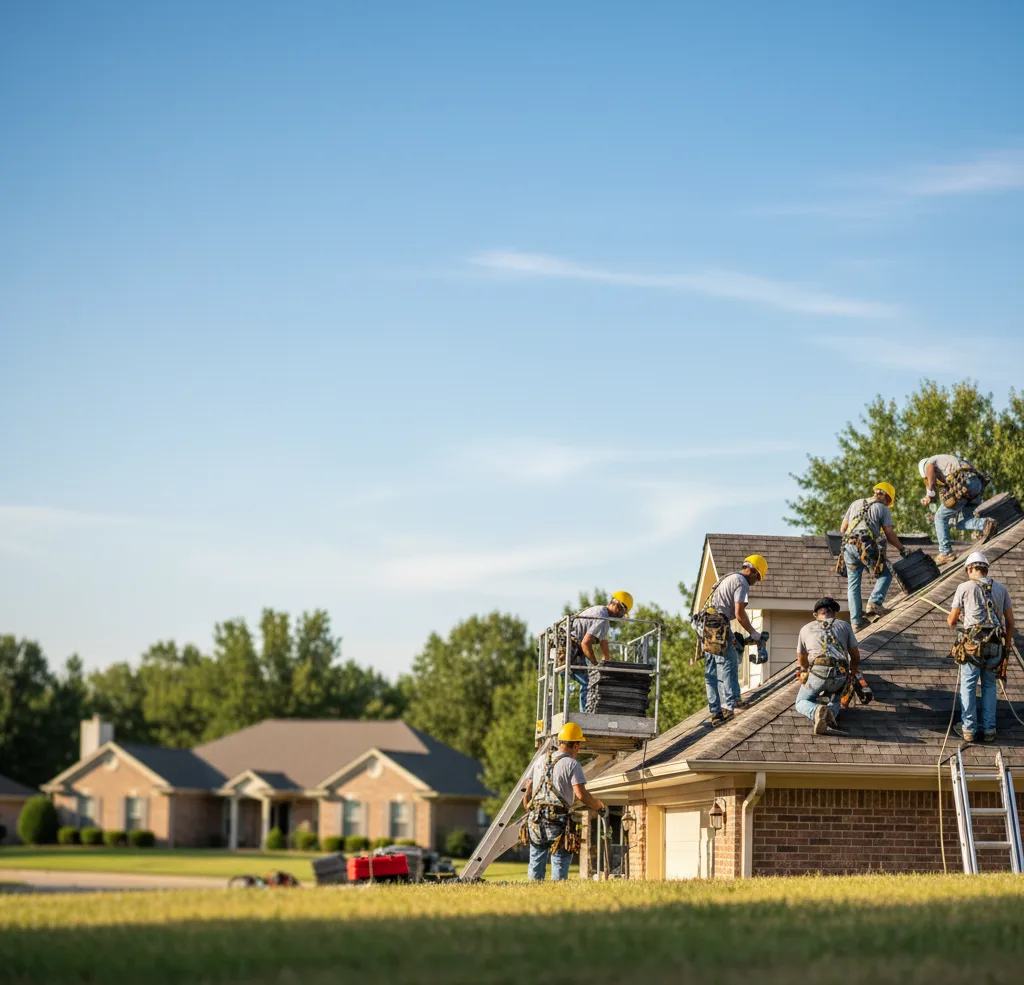
Many property owners assume that roof damage appears only as obvious holes or missing shingles. In practice, storm impact often shows first through lifted edges, dented surfaces, or displaced granules that leave asphalt exposed. Checking attic spaces for daylight or water stains can reveal problems before leaks become interior issues. A systematic walk-around also catches displaced vents or loosened flashing that allow moisture entry during later rain. These details matter because partial damage can worsen if left unaddressed through seasonal temperature changes.
Some believe that any leak after high winds must trace to a single large tear needing roof leak repair. Actual causes frequently involve multiple small points where seals have failed around nails or pipe boots. Others expect that interior ceiling spots always line up directly below the exterior breach, yet water often travels along rafters before appearing. Examining both the roof plane and the attic framing together reduces the chance of overlooking secondary entry routes that develop over time.
FAQ

They lift the row above the damaged area and examine the nails and underlayment directly. If the nails are still tight and the felt shows no staining, only the broken shingles are swapped. When staining extends under good-looking shingles, the crew extends the repair until clean material is reached.
The extra layer changes fastener length and may require removal of a small section to reach solid decking. The crew notes the condition of the older layer on the diagram so the homeowner can decide whether a broader removal makes sense later.
Granule loss on the surface does not always mean the underlying felt has failed. The felt layer can remain watertight even after the top coating wears away, especially on slopes that do not face prevailing weather. A direct check of the felt is required before deciding whether replacement is needed.
Shingle Roof Repair across the USA. Call (888) 448-7024.
Call (888) 448-7024